tirsdag 13. desember 2011

UNG HØNSEHAUK YOUNG GOSHAWK

(Det ble noe krøll med denne hønsehaukbloggen (rota det til med en kladd til highlights), så jeg legger den ut på nytt)

I sluttten av november er det MØRKT i hønsehaukskogen i Flatanger !! ....og spesielt mørkt var det da stormen "Berit" raste i tretoppene. En fotografisk utfordring selvfølgelig, men også veldig stemningsfullt. 

Late November in Norway in the thick goshawk forest is a DARK experience, and especially when the demolishing hurricane "Berit" was raging the treetops ! A challenge photographically of course, but also very special. 

 D3s, 600 4,0, f4,0, 1/60, -0,33, ISO 6400

 D3s, 600 4,0, f4,0, 1/80, ISO 1600

 D3s, 600 4,0, f4,5, 1/50, ISO 3200

 På jerpe / with hazel hen prey
D3s, 600 4,0, f4,5, 1/80, ISO 3200

 På rype / with ptarmigan prey
D3s, 600 4,0, f4,0, 1/100, -0,33, ISO 3200

 D3s, 600 4,0, f4,0, 1/60, ISO 6400

Nøtteskrikene var vettskremte / the jays were terrified !
D3s, 600 4,0, f4,0, 1/100, -0,33, ISO 1600

mandag 5. desember 2011

LAMMERGEIER !!

Shooting landscapes with long lenses from small hides is not an easy option. This is one of the slopes in foot of a cliff visible from the hide.
D3s, 200-400 4,0, 400 mm, f6,3, 1/640, ISO 500 

Spanish Pyrenèes nov 12th 2011 : Beeing totally overwhelmed by the griffon experience (gåsegribb) my photographer friend Dario Mesonero Romanos and I had in the remote Pyrenèes that morning on the 12th of November (see last blog), the silence in the hide after the vultures had left was... total. I honestly expected nothing more of Torre de Tamurcia !! However Dario kept talking about the lammergeier (lammegribb), about the bird being a loner, extremely shy and rare, and said we had a chance for it since the swarm of griffons now was gone.

I was in "deep flashback emotions" over the incredible griffon adventure, as Dario suddenly whispers : "Lammergeier !!"  I thought the guy was joking (would have been a very bad joke Dario !!!), but he kept going "Lammergeier, lammergeier".  Then I saw it too, a quick shadow in the air above, with that typical lammergeier silhouette :  long arrow-shaped tail, slightly angled wings, a huge bird with wingspan close to 3 m and still : with that quick raptor flight. My heart was up in my throat beating !!
These vultures eat bones, not meat. I knew they would just pick a knuckle and leave again. We had the birds (a pair) for only a minute or two. Cameras went like machine guns ... and then, just as suddenly they appeared, ..... they were gone again, "eaten" by the vast Pyrenèe landscape !!

I smiled all the 700 km back to Madrid

The pictures are not the best, I know that,- but for me it was a great experience and still : a good photographical  start. I will definitely come back for this one !! 

My first close encounter with this majestic bird
D3s, 600 4,0, f5,6 1/1000, ISO 1000

On ground for very short time
D3s, 600 4,0, f5,6, 1/2000, ISO 1000

Wingspan up to 2,95 m makes a pretty big bird !
D3s, 600 4,0, 5,6, 1/640, ISO 1000

Typical angled wings and arrow-shaped tail is visible. Holding a knuckle by the claws.
D3s, 600 4,0, f5,6, 1/640, ISO 1000

I have been shooting red kites (glente) before, but never had them close on ground before.
D3s, 600 4,0, f5,6, 1/1000, ISO 1250

Red kite (glente)
D3s, 600 4,0, f5,6, 1/800, ISO 1250

Red kite (glente)
D3s, 600 4,0, f5,6, 1/800, ISO 1250

Red kite portrait (glente)
D3s, 600 4,0, f5,6, 1/320, ISO 640

Red kite flight (glente)
D3s, 600 4,0, f5,6, 1/1000, ISO 1250

Red kite flight (glente)
D3s, 600 4,0, f5,6, 1/1000, ISO 1250

Red kite flight (glente)
D3s, 600 4,0, f5,6, 1/800, ISO 1600

This is what a scabies-infected (skabb-infisert) fox looks like. Poor animal !!!
D3s, 600 4,0, f6,3, 1/1000, ISO 640

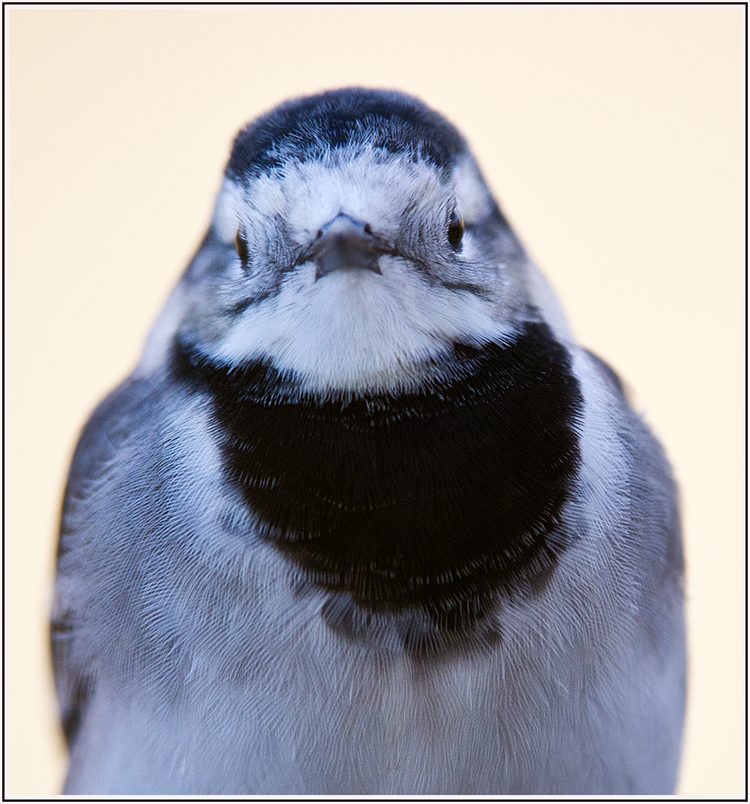
A scandinavian wagtail on winter holiday in Spain ?
D3s, 200-400 4,0, 280 mm, f6,3, 1/640, +0,33, ISO 2000, handheld

D3s, 600 4,0, f6,3, 1/250, +0,33, ISO 500

D3s, 200-400 4,0, 400 mm, f5,6, 1/640, +0,33, ISO 1600, handheld

THE SPANISH FLY

In the remote Pyrenèes a local fly happened to come into our car. Her full name was :

Carmen Maria Quebrantahuesos Tamurcia
For us, she was only : Carmencita

We were not aware of her presence in the car as we were leaving Torre de Tamurcia, and by accident ....she came with us all the 700 km back to Madrid. Carmencita of course had a family in Torre de Tamurcia and her ancestors have been surviving on cowshit and local carcasses up there for decades. Now she`s suddenly and unwillingly become a "country girl in the big city of Madrid", ...which of course, may pose some minor problems. 

So, Carmencita, if you ever read this, we want you to know that we are so sorry for putting you in this situation !! 

Now, our best piece of good advice  to you would be as follows : Get rid of that silly country accent of yours, adapt some fancy urban habits and try to look "pretty cool". Over time we are sure that you will find yourself a handsome and caring city-boy for future husband. Yes, city carcasses are hard to find (in best case you would normally just find a dry, half eaten hamburger), but with your sense of smelling, you will surely find a proper place for many future eggs in your future city life.

Good luck Carmencita !!      

tirsdag 29. november 2011

IBERIAN GRIFFON VULTURES (SPANSK GÅSEGRIBB)

One of the first ones to land at dawn
D3s, 600 4,0, f4,0, 1/50, ISO 6400

The Spanish Pyrenèes hold some magnificent untouched natural wildernesses, and being here for the first time, I was really amazed. Photographer Dario Mesonero Romanos took us to a remote place called Torre de Tamurcia, and here we had 2 full days / nights in a small hide for Iberian vultures. In this specific hide we had to shoot through glass, so called "one way glass" (which was not at all as "one way" as we thought). The glass of course takes away a considerable amount of available light for the camera and I as also concerned about sharpness shooting through glass. The sharpness however, performed without problems. We had to our disposal 5 full barrels of sheep intestines / slaughter leftovers, and we carefully portioned 2 of these for the first day. The griffons (gåsegribben) appeared early next morning at dawn, and I honestly nearly panicked when the windows in the hide (due to difference in outside / inside temp) suddenly went milky white with condensation !! In this situation I had no choice : I had to try to wipe it carefully off in front of the lens ....and the consequence was disastrous : the vultures all took off together...and never returned that day.

The following night we polished windows with any-condensation polish (!!) and poured out the remaining 3 barrels of smelly carcass. This was in my eyes a considerable amount of "bird-food", and, unexperienced as I am with vultures, I expected this to last for hours the next day. 

Early next morning we first saw 1, then 2, then 5, then 8 vultures in the air.... and suddenly, out of nowhere, they all came down as on a signal,...in incredible numbers !! I estimated the numbers of griffons to be approx 4 - 500 !!!....and they literally  "rolled over"  the carcass like a living "consuming carpet"!! The meat was basically gone in 10 minutes. I was amazed !!

We had no condensation problems this morning, and the griffons stayed with us for almost 3 hours... before they all took off together and simply dispersed into the vast Pyenèe landscape.

Ugly ? Well, in our human eyes ...with their bare heads and necks and very special preferences for food ... maybe, ...but also beautiful. In fact very beautiful !! They perform like sailships in the air with wingspan close to 3 m and on close range they reveal beautiful colors with a clean white "ostrich-scarf" around the neck and intelligent, sharp eyes. And besides : anyone who have seen the cartoon movies "The Jungle Book" and "Robin Hood" with the soldiers of Nottingham, ...must have some kind of a relation to vultures !!!  

It took them approx 10 minutes to finish 3 barrels of carcass !!
D3s, 600 4,0, f4,0, 1/125, +0,67, ISO 6400

D3s, 600 4,0, f4,0, 1/100, +0,67, ISO 5000

D3s, 600 4,0, 1/80, +0,33, ISO 5000

D3s, 600 4,0, f4,0, 1/100, ISO 6400

Portrait of griffon vulture
D3s, 600 4,0, f4,0, 1/250, ISO 6400

Portrait of griffon vulture
D3s, 600 4,0, f4,0, 1/200, ISO 6400

Portrait of griffon vulture
D3s, 600 4,0, f4,0, 1/400, ISO3200

Portrait of griffon vulture
D3s, 600 4,0, f4,0, 1/200, ISO 3200

Portrait of griffon vulture
D3s, 600 4,0, f4,0, 1/250, ISO 1600

Portrait of griffon vulture
D3s, 600 4,0, f4,0, 1/200, ISO 1600

Portrait of griffon vulture
D3s, 600 4,0, f4,0, 1/200, ISO 1600

Portrait of griffon vulture
D3s, 600 4,0, f4,0, 1/200, ISO 1600

D3s, 600 4,0, f4,0, 1/320, ISO 1600

With wingspan close to 3 meters... this is a huge bird !
D3s, 600 4,0, f5,6, 1/1250, +0,67, ISO 500

 D3s, 600 4,0, f5,6, 1/2000, +0,33, ISO 1600

D3s, 600 4,0, f5,6, 1/2500, +0,33, ISO 1600

Pyrenèe landscape
D3s, 70-200 2,8 / 70, f6,3, 1/1000, -0,67, ISO 200 

*

I got more stuff from the Pyrenèes coming up !!

torsdag 17. november 2011

IBERISK STEINBUKK / IBERIAN IBEX

 Sierra de Gredos, home of Iberian Ibex
D3s, 200-400 / 200 mm 4,0, f9,0, 1/250, ISO 200

Det begynte med at SAS ikke klarte å sende bagasjen min til Madrid, men av en eller annen grunn : 
til Frankfurt !!, og de kunne heller ikke levere i Madrid før langt ut på neste dag. Slikt blir problematisk når min venn Dario Mesonero Romanos venter ved Terminal 2 i Madrid for å ta oss direkte opp til Sierra de Gredos NP i sentrale Spania for å fotografere iberisk steinbukk i brunsttida.  Løsningen ble hjerterå !! : Neste morgen, etter en næringsrik frokost bestående av to søte kaker og en dobbel espresso, ....bar det opp i i fjellet i nysnøen i Gredos, uten korte brennvidder (som lå i hovedbagasjen). I lånte sokker, støvler, genser og brune cordfløyelsbukser (!) prøvde jeg, så godt jeg kunne, å holde på min norske "fjellverdighet". Etter steil klatring i sleipe fjellsider så vi endelig steinbukk i det fjerne. Jeg prøvde meg på en litt proff "indianer-approach" ....i lav profil, kattemykt, fra stein til stein. 

Det var da det skjedde !!!!,  helt uforvarende : Noen stakk en kniv i ryggen min !!!.... langt nede på venstre side...antakeligvis helt inn til skaftet !! I alle fall føltes det slik. Kink i ryggen er ingen spøk når man har formell tillatelse med stempel og underskrifter, til å "jakte" steinbukk i Gredos kun denne ene dagen, og når man i tillegg befinner seg langt oppi steinrøysa når det skjer.  Det ble en relativt krevende tur, kan man si (!)

.....og jeg som allerede på forhånd hadde et anstrengt forhold til SAS !!

På veien hjem kjørte vi innom en cafè (!!) for å kjøpe smertestillende tabletter. Akkurat dèt var litt rock`n`roll !!!

Engish :  According to the newly released "Mammals of the World, vol 2 : Hoofed Mammals", the world population of Iberian Ibex (Capra pyenaica) is approx 50 000 animals, of which the majority is Spanish, and only 100 are Portugeese.  My friend, the excellent photographer Dario Mesonero Romanos, had invited me to Spain,- and together with photographer Fernando de Antonio Jimènez, they took me up into Sierra de Grades NP to find some of these magnificent alpine mammals. Up there in the snow, at the altitude of approx 1500 m, we climbed some quite rough mountain slopes and, after hard work with a couple of "smaller accidents"under way, we finally found our herd. Provided a slow and careful approach and also repeated attempts, we finally managed to get relatively close. Especially the bigger males seemed to be more relaxed with us than the rest of the herd. These big guys appear black and gray, while females and younger animals have a brownish color. This was mating season for the goats and we had a small, yet unrealistic hope to witness a fight between the dominant males. This never happened, but they definitely had mating behavior. The big guys can weigh up to 90 kg and they have an impressive male pride in their huge horns. When seeing in this on close range, I reflected upon the immense symbol effect these horns have had in earlier gothic periods, being associated with evil spirits....and, of some reason, to the bad old guy himself. Funny, `cause they are friendly animals.      

Thank you Dario, for showing me this !

Check out Dario`s pictures on www.dmrwildphoto.com.

 A herd of goats
D3s, 200-400 4,0 /200mm, f6,3, 1/800, ISO800, +0,67

 Young male goat
D3s, 200-400 4,0 / 400mm, f6,3, 1/1600, ISO800, +0,67

 Female goat with calf
D3s, 200-400 4,0 / 400 mm, f6,3, 1/1000, ISO 800, +0,67

 Dominant male and female with last years calf
D3s, 200-400 4,0 / 400 mm, f6,3, 1/2000, ISO800, +0,33

 Dominant male and female with last years calf
D3s, 200-400 4,0 / 400 mm, 1/1250, ISO800, +0,67

 The closest we got to a fight...
D3s, 200-400 4,0 / 400 mm, f1250, ISO800, +0,67

 Male goat
D3s, 200-400 4,0 / 400 mm, f6,3, 1/640, ISO800, +0,33

 Male goat passing an opening in the green thickets
D3s, 200-400 ,0 / 400 mm, f6,3, 1/500, ISO 800, +0,33.

 Male goats
D3s, 200-400 4,0 / 310 mm, f6,3, 1/640, ISO800, +0,33

 Male goat
D3s, 200-400 f4,0 / 400, f6,3, !500, ISO800, +0,33

 Male goat
D3s, 200-400 4,0 / 280 mm, f6,3, 1/640, ISO800, +0,33

Male goat
D3s, 200-400 4,0 / 400 mm, f6,3, 1/640, ISO800, +0,33

Gothic horns !!
D3s, 200400 4,0 / 400 mm, f6,3, 1/800, ISO800, +0,33